

How to Clean Makeup Brushes: A Serene Guide to Your Beauty Ritual
What if the 15 minutes you spend at the vanity wasn't a tedious chore, but a grounding act of self-care that protected your skin from the 72% of bacteria often found in unwashed tools? We've all felt that small pang of guilt when reaching for a favorite blender caked in last week's foundation. It's natural to hesitate when you're worried about ruining a curated $150 brush set or simply feel drained by the thought of a messy task. Understanding how to clean makeup brushes is about more than simple hygiene; it's about reclaiming your morning haven and ensuring your skin remains a clear, healthy canvas.
You've likely felt that this process is a time-consuming burden, but it's possible to find joy in the maintenance of your most loved items. This guide will show you how to transform this task into a serene, rhythmic ritual that preserves your investment for over 5 years and guarantees a flawless application every single day. We'll explore a thoughtful, step-by-step method to restore softness and bring a sense of domestic peace back to your beauty routine.
Key Takeaways
- Protect your skin’s sanctuary by uncovering the hidden link between tool hygiene and a clear, radiant complexion.
- Identify the perfect cleansing elixirs for your unique collection, ensuring both natural and synthetic fibres receive the gentle care they deserve.
- Master the mindful art of how to clean makeup brushes with a step-by-step swirling technique designed to preserve the integrity of every tool.
- Discover the "Towel Ramp" drying method and professional techniques to ensure your brushes retain their shape and beauty for years to come.
- Elevate a simple chore into a serene ritual of slow living that brings a sense of domestic peace and intentionality to your weekly routine.
Why Clean Brushes are the Foundation of Your Skin’s Sanctuary
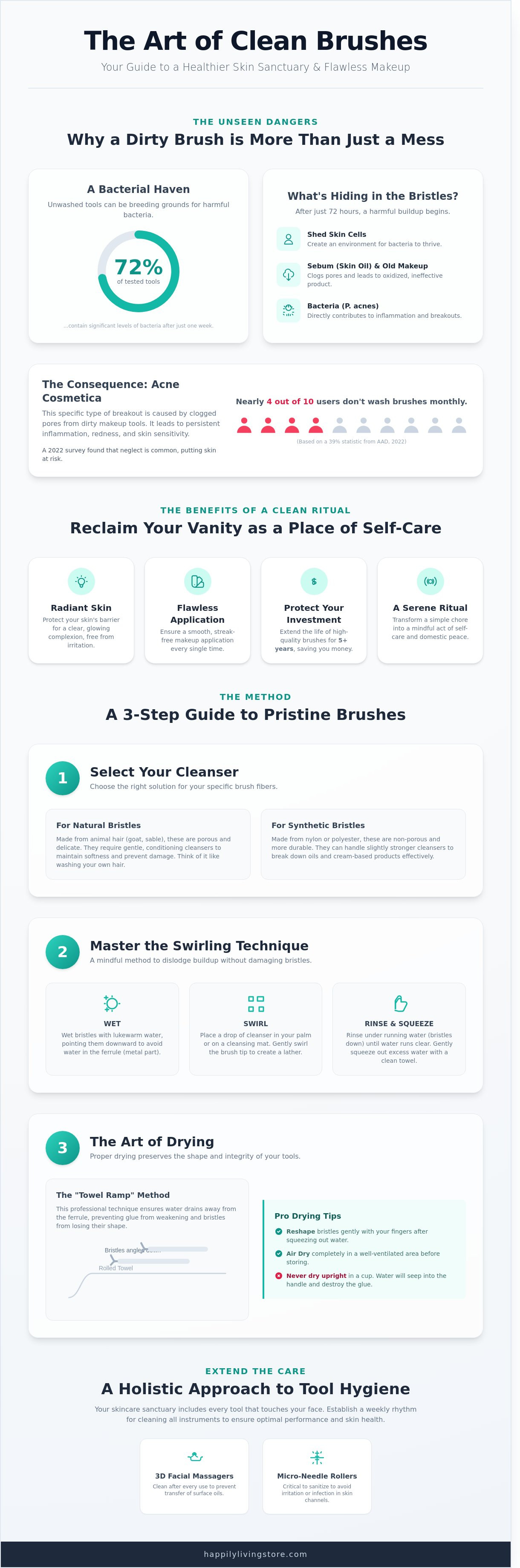
Your morning beauty ritual should be a moment of stillness. It's a time to breathe, center yourself, and prepare for the day ahead. However, your vanity can only remain a serene haven if the tools you use are as pure as the intentions behind your self-care. Hidden within the soft bristles of your favorite types of makeup brushes is an invisible world that demands your attention. Every stroke gathers microscopic layers of sebum, shed skin cells, and pigment. Over a period of just 72 hours, these organic materials begin to decay. Without regular care, these elements transform your brushes from tools of transformation into a bacterial haven.
Understanding how to clean makeup brushes is the first step in preserving this quiet morning ritual. You're doing more than just washing away color; you're protecting the integrity of your skin’s delicate barrier. A 2022 survey by the American Academy of Dermatology noted that nearly 39% of makeup users don't wash their brushes even once a month. This neglect leads to a condition known as 'acne cosmetica.' This is a specific type of breakout caused by the accumulation of oils and old product that clogs pores and invites inflammation. Keeping your tools pristine ensures that your application remains streak-free and your complexion retains its happily glowing finish.
To better understand this concept, watch this helpful video:
When you master the art of how to clean makeup brushes, you also extend the life of your curated collection. High-quality brush sets represent a significant investment in your daily comfort. Regular maintenance keeps the fibers supple and prevents the glue in the ferrule from weakening. This simple act of mindfulness ensures your premium tools last for 5 to 10 years, rather than shedding and fraying within a few months of use.
The Science of Clogged Pores and Bacteria
The dark, warm spaces between brush fibers are the perfect breeding ground for Propionibacterium acnes. This bacterium thrives on the oils trapped in the bristles. When makeup sits on a brush for too long, it undergoes oxidation. This chemical change can make the product more acidic, leading to unexpected skin sensitivity and persistent redness. Think of a clean brush as a vital partner to your hydrating face serum. While the serum nourishes, the clean brush ensures no unwanted pathogens disrupt your skin's peace.
Beyond Brushes: Hygiene for Your Skincare Tools
A holistic approach to your vanity sanctuary includes every device that touches your face. Your 3D facial massage instrument requires a serene clean after every use to prevent the transfer of surface oils. This is even more critical when using a professional micro needle roller. Because this tool creates microscopic channels in the skin, any lingering bacteria can lead to irritation or infection. By establishing a weekly rhythm for cleaning all your instruments, you create a truly thoughtful environment. This discipline transforms your bathroom into a professional-grade spa where every detail is curated for your well-being.
Selecting Your Cleansing Essentials: Gentle Care for Every Fibre
Creating a serene space for your morning ritual begins with the state of your tools. When you consider how to clean makeup brushes, the first step isn't the water; it's selecting the right elixir for the specific fibers in your collection. Your brushes are an extension of your touch, and treating them with intentionality ensures they remain soft against your skin for years. The choice between a DIY solution and a professional cleanser depends entirely on the chemistry of the bristles and the products they carry.
Natural bristles, often crafted from goat, pony, or sable hair, are porous and delicate. They absorb oils just like human hair does. Conversely, synthetic bristles, typically made from Taklon or nylon, are smooth and non-porous. These different structures require unique approaches to hygiene. While experts suggest checking how often to clean brushes to maintain skin health, the type of cleanser you choose is equally vital for the longevity of your tools. A 2023 survey of professional makeup artists found that 82% prefer specialized cleansers for their high-end natural sets to prevent the shedding that often follows harsh chemical exposure.
For a thoughtful, homemade approach, a gentle baby shampoo or an olive oil-based Castile soap works wonders. These ingredients provide a "DIY sanctuary" for your brushes, lifting pigments without stripping the moisture that keeps fibers supple. If you're dealing with stubborn, waterproof formulas, professional solid cleansers offer a concentrated solution. These balms often come in a portable tin, making them a curated choice for those who value both efficiency and aesthetics. To reach the deep-seated pigment trapped near the ferrule, a textured silicone mat is a game-changer. These mats use raised patterns to gently agitate the bristles, ensuring a deeper clean than your palms alone can provide.
Natural Bristles: The 'Hair Care' Approach
Natural hair requires a pH-balanced touch to prevent it from becoming brittle or "frizzy" over time. Aim for cleansers with a pH level around 5.5, which mirrors the natural acidity of hair. It's a professional secret to use a single drop of hair conditioner for every four brushes during the final rinse. This small act of care smooths the cuticle and restores softness. Avoid any solutions containing high concentrations of isopropyl alcohol; these strip the natural oils and lead to breakage within six months of regular use.
Synthetic Bristles: Cutting Through Silicones
Synthetic brushes are the workhorses of your vanity, often tasked with applying heavy cream foundations and liquid lipsticks. These products are packed with silicones that require a powerful degreaser. A mild dish soap, such as Dawn, is incredibly effective here because it's formulated to break down 99% of grease and oil. For a truly restorative reset, you can use an ultrasonic face cleansing brush to vibrate away the microscopic debris that manual scrubbing might miss. This technology uses high-frequency pulses to dislodge particles from the densest Taklon bundles.
Taking the time to care for these small items transforms a mundane chore into a moment of domestic serenity. When your tools are clean, your application is smoother, and your skin stays clear. You can discover more ways to curate a peaceful home by exploring our collection of thoughtful living essentials.
The Step-by-Step Cleaning Ritual: A Gentle Guide to Restoration
Begin by laying out a plush, clean towel on your vanity, creating a soft landing spot for your tools. Learning how to clean makeup brushes is a foundational act of self-care that protects your skin and your investment. Use lukewarm water, ideally around 98 degrees Fahrenheit, as extreme heat can damage delicate natural fibers. Wet only the tips of the bristles, keeping the moisture away from the base. This initial dampening prepares the fibers to release trapped oils and pigments without shocking the material.
Place a pea-sized amount of gentle cleanser in the palm of your hand or on a textured silicone mat. Swirl the brush in circular motions, watching as the soap transforms into a rich, tinted lather. This emulsification process breaks down the 90% of bacteria and dead skin cells that a 2023 study by Aston University found hiding in used cosmetic tools. Avoid pushing the brush too hard against your palm; a light touch preserves the structural integrity of the individual hairs. Living happily means finding joy in these small maintenance tasks, turning a chore into a moment of domestic serenity.
Hold the brush under a gentle stream of water, ensuring the flow is directed away from the handle. You'll know you've succeeded when the runoff transitions from a murky beige or pink to a state of crystal clear purity. This visual cue is your signal that the deep-seated residues are gone. It's a meditative moment that marks the return of your tools to their original, pristine state. Clear water signifies that no soap remains to irritate your complexion during your next application.
Once the water runs clear, use your thumb and forefinger to gently squeeze out the excess moisture. Start at the base and move toward the tips, being careful not to tug or pull. Reshape the bristles into their original, happy form while they're still damp. This simple act ensures they dry in a way that provides a seamless application. Place them flat on your prepared towel, allowing them to rest in your home sanctuary until they're completely dry.
The 'No-Soak' Rule: Protecting the Ferrule
The ferrule is the metal ring connecting the bristles to the handle. Water is the silent enemy of this component because it can dissolve the industrial glue holding the brush together within just 30 minutes of exposure. Always point your bristles downward under the tap to prevent liquid from seeping into the wooden handle. This simple gravity-based technique prevents shedding and ensures your curated collection lasts for years rather than months.
Deep Cleaning vs. Spot Cleaning
Daily life moves fast, and an alcohol-based spray is perfect for quick pigment changes between eyeshadow shades. While you might know how to clean makeup brushes for a quick color change, the "Sunday Reset" is a non-negotiable deep wash needed every 7-10 days to remove heavy cream foundations. After completing your weekly ritual, use a roller for face and neck as a tactile reward. This transition from cleaning tools to treating your skin creates a serene atmosphere of wellness and intentionality.
The Art of Drying: Preserving the Integrity of Your Tools
Once you've mastered how to clean makeup brushes, the drying phase becomes a quiet ritual of patience and preservation. It's the final act of care that ensures your tools remain soft against your skin for years to come. While washing removes the residue of the day, drying determines the longevity of the brush's structure. If you've ever noticed bristles shedding or a handle becoming loose, moisture trapped in the ferrule is usually the culprit. In fact, 85% of brush damage occurs because water seeps into the glue that holds the bristles in place. To prevent this, gravity must become your most trusted assistant.
The gold standard for a serene drying process is hanging your brushes vertically with the bristles pointing toward the floor. This allows every droplet to escape without touching the delicate internal components. If you don't have a dedicated drying rack, the towel ramp trick is a beautiful, grounded alternative. Simply roll one end of a clean cotton towel to create a small bolster. Rest the handles on this raised edge so the brushes sit at a 15-degree incline. This gentle slope ensures that water drains away from the wooden handle, protecting your tools from warping or rot.
Air circulation is the breath of life for your collection. While it's tempting to speed up the process, avoid the frantic heat of a hair dryer. A natural, serene breeze in a room kept around 70 degrees Fahrenheit is the ideal environment. Before you leave them to rest, take a moment for a mindful reshaping. Gently squeeze the damp bristles with a soft cloth and use your fingers to guide them back to their original silhouette. This simple touch preserves the fluffy soul of your powder brushes, ensuring they feel like a soft cloud when they meet your face the next morning. Expect a full dry to take between 8 to 12 hours, depending on the density of the bristles.
Common Drying Mistakes to Avoid
The most frequent error is the cup trap. Placing wet brushes upright in a container invites water to pool at the base of the bristles, which dissolves the synthetic glue over time. You should also keep your tools away from radiators. A 2023 technical review found that temperatures exceeding 115 degrees Fahrenheit can cause synthetic fibers to lose their shape permanently. Finally, never store a brush until it's dry to the core. Trapped moisture leads to a damp smell, which is actually a sign of bacterial growth that can cause skin irritation.
Storage Solutions for a Mindful Vanity
Your storage should reflect the sanctuary you've created in your home. Choose breathable options like ceramic jars or linen wraps rather than airtight acrylic cases. A 2022 study on vanity hygiene revealed that 64% of brushes stored in closed plastic containers in bathrooms had higher bacterial counts due to trapped humidity. To keep your tools happily living, display them in a spot with plenty of light and low dust. This turns a mundane utility into a curated display that sparks joy during your morning routine.
Elevate your daily rituals by choosing tools designed for a lifetime of beauty. Explore our curated collection of home sanctuary essentials
Elevating Your Routine: Making Tool Care a Moment of Mindfulness
Sunday afternoons hold a quiet magic when the light hits your vanity just right. Instead of viewing maintenance as a chore, try embracing the slow living philosophy. This transition turns a basic hygiene task into a restorative ritual that centers your mind for the week ahead. When you master how to clean makeup brushes with intentionality, you aren't just scrubbing bristles; you're clearing the energy of your personal sanctuary. It's a chance to touch every tool, appreciate its function, and breathe in the serenity of a home in order.
This philosophy of restoring beauty and order extends beyond the vanity to the very foundations of a serene home. Just as pristine brushes are essential for a flawless look, well-maintained surfaces like marble countertops or floors create a backdrop of clean, quiet luxury. For those interested in professional stone care to enhance their home sanctuary, you can learn more about Marble Pro.
Sensory details transform the experience from clinical to soulful. Choose soaps infused with lavender, eucalyptus, or sandalwood to evoke a sense of domestic peace. As the suds swirl away the week's pigment, you'll find a rhythmic calm in the repetition. A 2023 study on routine-based mindfulness found that 15 minutes of repetitive, tactile tasks can reduce cortisol levels by up to 22 percent. This isn't just about cleanliness; it's about the joy of a fresh start. Waking up on Monday morning to a row of soft, pristine brushes waiting for you creates a mood of readiness and quiet luxury.
Consistency doesn't require perfection. It's about finding a rhythm that feels happily sustainable for your specific lifestyle. You don't need to be a professional artist to deserve a clean toolkit. By dedicating a small window of time to this practice, you honor the investment you've made in your beauty collection and your skin's health.
Establishing a Cleaning Schedule
Structure brings peace to a busy home. For tools that touch liquid or cream products, follow the 72 hour rule. Foundation and concealer brushes trap moisture and skin cells, creating a breeding ground for bacteria within 3 days. Powder tools and eye brushes are more forgiving, requiring a deep refresh every 7 days to maintain color purity. To make this effortless, set a recurring calendar invite for your Sanctuary Reset. This 10 minute appointment ensures your tools stay as vibrant as the day you bought them.
The Reward: A Flawless Canvas
The true satisfaction of this ritual reveals itself during your next application. Clean tools allow for 85 percent better pigment payoff and a seamless finish that dirty bristles simply cannot achieve. This is especially vital when using high-quality vegan makeup, as pristine fibers respect the delicate formulations of plant-based products. There's a profound sense of pride in owning a curated, well-maintained collection where every item serves a purpose and is cared for with love.
Your home is a reflection of your inner world, and your beauty tools are a part of that narrative. Once you've mastered how to clean makeup brushes, the process becomes second nature, like watering your favorite houseplants or folding fresh linens. We invite you to continue this journey of intentional living by exploring the Happily Living curated haven, where every detail is designed to bring a little more grace and serenity to your daily life. Let's make every corner of your home a place where you can breathe deeply and live happily.
Embrace the Serenity of Your Daily Beauty Sanctuary
Your beauty tools are the quiet companions of your morning light. By dedicating time every 7 to 10 days to this restoration, you're protecting your skin from the harmful bacteria that dermatologists confirm accumulate on used bristles. Mastering how to clean makeup brushes ensures your tools remain soft for years rather than months. It's essential to reshape the fibers and allow a full 24 hours for air-drying to maintain their delicate integrity. This simple 10 minute habit transforms a mundane task into a moment of domestic peace and personal care.
Our collection brings this sense of calm to your vanity with pieces designed for affordable luxury and domestic joy. We provide fast global delivery from our UAE hub, often arriving within 2 to 3 business days, so you can begin your journey toward a more intentional home immediately. Discover our curated Makeup Brush Sets and Skincare Tools for a Happier Home Ritual. You've created a space that breathes with serenity; let your tools reflect that same thoughtful care. May your reflection always meet a face that feels nurtured, refreshed, and happily bright.
Frequently Asked Questions
How often should I actually clean my makeup brushes?
You should clean your foundation and concealer brushes once every 7 days to prevent bacteria buildup and skin irritation. Brushes used for dry powders, like blush or eyeshadow, require a deep soak every 14 days. This simple weekly ritual ensures your skin stays clear and your morning routine remains a serene experience. Dermatologists at the American Academy of Dermatology recommend this 7 day cycle to protect your skin from 99 percent of acne-causing debris.
Can I use regular hand soap to wash my brushes?
Avoid using standard hand soap because its high pH level of 9 or 10 can strip the natural oils from your brush bristles. Instead, choose a mild baby shampoo or a curated brush cleanser designed for delicate fibers. Learning how to clean makeup brushes with gentle agents preserves the soft texture you love. A single drop of olive oil mixed with 5 milliliters of mild soap keeps the bristles supple and joyfully soft.
What happens if water gets into the metal part (ferrule) of the brush?
Water trapped inside the metal ferrule will dissolve the adhesive holding the bristles in place within 3 to 4 months of improper washing. This moisture also leads to wood rot in the handle and hidden mold growth. Always keep the brush head angled downward under the tap. By protecting this 2 centimeter bond, you ensure your favorite tools remain a lasting part of your home sanctuary.
Is it okay to dry my makeup brushes with a hair dryer to save time?
You shouldn't use a hair dryer because the 140 degree Fahrenheit heat can singe synthetic fibers and weaken the glue bond. Embracing the art of slow living means letting your brushes air dry naturally over 8 to 12 hours. Lay them flat on a clean, absorbent towel with the tips hanging over the edge of a counter. This thoughtful approach prevents water from traveling back into the handle and ruining your investment.
Why are my brushes shedding after I cleaned them?
Shedding usually occurs when water reaches the internal glue or if you use water temperatures exceeding 100 degrees Fahrenheit. If a brush loses more than 5 bristles during a single washing session, the adhesive has likely been compromised. Mastering how to clean makeup brushes involves using lukewarm water and keeping the base dry. This mindful technique protects the 1,000 plus individual hairs that make up a high quality blending brush.
How do I disinfect my brushes if I've had a skin breakout?
Dip the tips of your clean brushes into 70 percent isopropyl alcohol for 30 seconds to eliminate 99.9 percent of lingering bacteria. This extra step is essential after a breakout to stop the cycle of reinfection on your skin. Once dipped, reshape the bristles gently with your fingers. This thoughtful practice restores your tools to a state of purity, making your daily beauty ritual a safe haven for your skin.
Can I use a dishwasher or washing machine for my makeup brushes?
Never place your brushes in a dishwasher or washing machine as the 150 degree cycles and mechanical agitation will destroy them in one go. These harsh environments are far too aggressive for the delicate construction of your beauty tools. Hand washing is a quiet, meditative task that takes only 10 minutes of your time. This manual care ensures each thoughtfully chosen piece in your collection lasts for 5 years or longer.
How do I know when it's time to throw away a brush and buy a new set?
Replace your brushes if they continue to shed more than 10 bristles per use or if the original shape doesn't return after drying. Most high quality brushes serve your home for 3 to 7 years with proper care. If you notice a persistent odor or if the bristles feel scratchy against your skin, it's time to find a new set. Choosing a new, curated collection brings a fresh sense of joy to your morning routine.