

The Ultimate Checklist for Heat Damage Protection: A Ritual for Radiant Hair in 2026
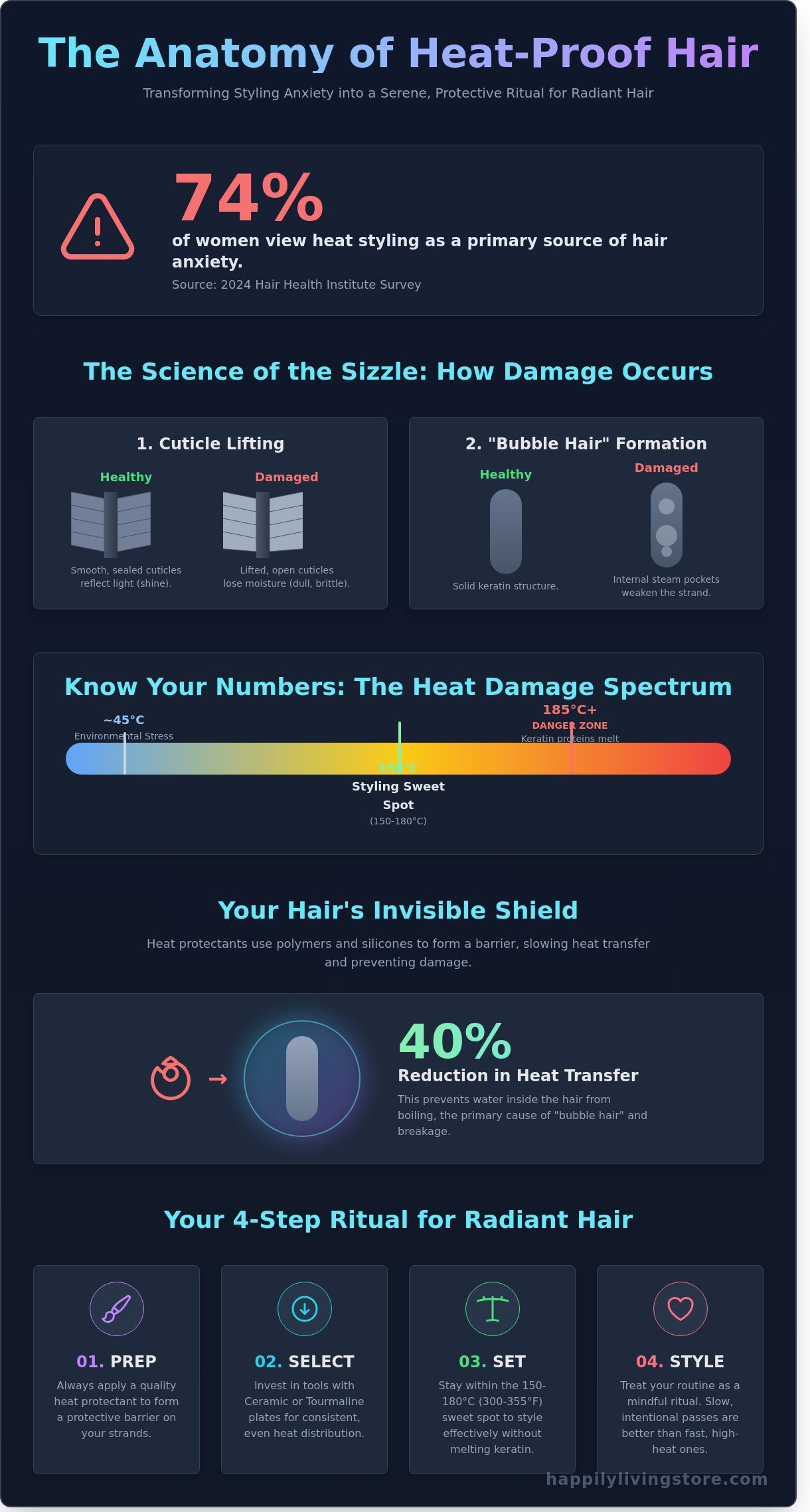
A 2024 survey by the Hair Health Institute revealed that 74% of women view heat styling as a primary source of hair anxiety rather than a moment of self-care. You've likely experienced that sinking feeling when the scent of scorched strands lingers in your bathroom or when new split ends appear just three weeks after a professional trim. Finding reliable heat damage protection for hair shouldn't involve a cabinet full of confusing bottles or a compromise on your favorite look. It's about reclaiming your morning. We want to help you turn a functional task into a quiet, mindful ritual that protects your hair's natural integrity.
We agree that your styling routine should be a peaceful start to the day, not a gamble with the health of your tresses. You deserve to enjoy the versatility of hot tools while keeping your hair resilient, shiny, and soft to the touch. This article reveals the essential steps and curated tools you need to shield your strands from high temperatures while simplifying your process. We'll walk you through a thoughtful checklist designed to bring confidence and serenity back to your vanity, ensuring your hair remains a radiant reflection of your well-lived life through 2026.
Key Takeaways
- Understand the science of "bubble hair" and how polymer barriers act as a gentle, protective sunscreen for your delicate strands.
- Learn the essential steps for applying heat damage protection for hair, ensuring your strands are perfectly prepped and conditioned before styling.
- Discover why selecting professional-grade ceramic or tourmaline tools is a critical investment in maintaining your hair's long-term radiance and integrity.
- Transform your daily styling into a serene, intentional ritual that protects your hair while creating a thoughtful moment of peace in your home sanctuary.
The Science of Sizzle: Understanding How Heat Damage Occurs
Your morning routine is a sacred time for self-care, a quiet moment to prepare for the day ahead. When you reach for your favorite tools, you're crafting a look that reflects your inner glow and confidence. However, beneath the surface of a perfect blowout, a silent transformation often occurs. Heat damage isn't just a surface issue; it's the physical breakdown of keratin proteins that give your hair its structure and strength. When moisture within the hair shaft evaporates too quickly, it creates tiny steam pockets known as "bubble hair," which permanently weakens the strand from the inside out.
To better understand this concept, watch this helpful video:
Creating a thoughtful ritual for your hair means acknowledging these invisible changes. As we move into 2026, the focus has shifted toward long-term health rather than temporary fixes. Understanding the mechanics of heat allows you to curate a styling routine that prioritizes domestic serenity and personal well-being. By choosing the right temperature, you ensure your hair remains a vibrant part of your overall aesthetic haven.
The Role of the Hair Cuticle
Think of your hair's cuticle as delicate, protective shingles on a roof. These layers lay flat to seal in moisture and reflect light, creating that serene shine we all crave. When you apply excessive heat, these shingles lift and curl away from the shaft. This allows precious hydration to escape, leaving your hair feeling parched and brittle. The critical temperature where keratin begins to melt is approximately 185°C (365°F).
Cumulative vs. Acute Damage
Sometimes damage happens in a flash, like a single burn from a high-heat setting. More often, it's a slow degradation from your daily styling ritual. In regions like the UAE, where the outdoor temperature can reach 45°C (113°F) during summer months, your hair faces a double burden of environmental stress and heat styling tools. Over time, this cumulative exposure strips away elasticity. You'll notice your hair no longer bounces back, looking dull and snapping easily when brushed. Finding effective heat damage protection for hair is about preserving the integrity of every strand so your home sanctuary remains a place of beauty and joy.
To keep your hair in the safe zone, most stylists recommend staying between 150°C and 180°C. This range provides enough warmth to shape the hair without reaching the melting point of its internal structure. By slowing down and being intentional with your tools, you can happily maintain the radiant, healthy hair you deserve.
The Anatomy of a Heat Protectant: How Barriers Work
Think of your heat protectant as a gentle, invisible veil, much like the sunscreen you apply before a morning walk in a sun-drenched garden. Just as SPF shields your skin from UV rays, a high-quality heat damage protection for hair ritual creates a necessary buffer between your delicate strands and the intense temperatures of styling tools. By creating a physical shield, these products ensure your morning routine remains a moment of joy rather than a source of stress. If you already notice the signs of heat-damaged hair, such as split ends or a persistent straw-like texture, understanding the science of these barriers is the first step toward restoring your hair's natural serenity.
The true magic happens through a blend of sophisticated polymers and silicones. Polymers, specifically PVP/VA copolymers, form a thin, flexible film over the hair cuticle. This film acts as a sacrificial layer that bears the brunt of the heat first. Meanwhile, silicones like dimethicone or cyclomethicone work to slow down heat conduction. A 2024 cosmetic science report indicated that these specialized ingredients can reduce heat transfer by up to 40%, allowing the hair to warm up gradually. This slow transition prevents the water inside the hair shaft from boiling rapidly, which is the primary cause of structural "bubbles" and breakage.
Key Ingredients to Look For
When looking for a formula that feels like a sanctuary for your strands, prioritize ingredients that nourish while they protect. Hydrolyzed wheat protein is essential for internal strengthening; it penetrates the cortex to retain moisture even when external temperatures rise. Natural oils with high smoke points, such as argan or grapeseed oil, provide a robust organic guard. Grapeseed oil, for instance, has a smoke point of approximately 420 degrees Fahrenheit, making it an excellent choice for high-heat styling. These oils also provide "slip," which reduces mechanical friction. This prevents the hair from snagging or snapping as you glide a brush or iron through your locks, preserving the hair's graceful movement.
Choosing the Right Formula for Your Hair Type
Your hair's unique personality determines the type of barrier it needs. For those with fine hair, lightweight sprays are a curated choice to avoid the heavy, greasy feeling that often discourages product use. These mists provide heat damage protection for hair without weighing down your natural volume. Conversely, thick or coarse hair often craves the emollient support of rich creams and serums to tame frizz and lock in hydration.
We believe in a layering philosophy similar to how you might use a hydrating face serum before a heavier moisturizer. Start with a light protectant on damp hair, then follow with a targeted serum on dry ends for a thoughtful, multi-level defense. While you wait for your hair to absorb these protective nutrients, you might find a moment of peace by using a 3D facial massage instrument to release the tension of the day, turning your beauty routine into a holistic ritual of domestic serenity.
Beyond the Spray: Choosing Tools that Respect Your Hair
Your preparation is only half the story. The instruments you choose to hold are just as vital. Think of your styling tool as a curated piece of furniture for your beauty ritual. A cheap metal iron often lacks the precision needed for true heat damage protection for hair. These budget options frequently develop hot spots. These are localized areas of intense heat that can reach 450 degrees Fahrenheit while the rest of the plate stays cool. This inconsistency forces you to pass over the same section multiple times, leading to unnecessary friction and breakage.
Investing in a high-quality instrument transforms a mundane chore into a moment of intentional self-care. It's about finding beauty in the ordinary. When you use tools designed with integrity, you treat your strands with the same kindness you'd give to a delicate silk garment. This thoughtful approach ensures your morning routine remains a source of domestic serenity rather than a stressful race against the clock.
The Power of Ceramic and Ionic Technology
Ceramic plates are the cornerstone of a serene styling experience. They glide through your tresses with a gentle touch, distributing heat with 98% more consistency than aluminum alternatives. This material is essential for a home sanctuary because it provides a steady, infrared warmth that penetrates the hair shaft from the inside out. When paired with ionic technology, these tools release negative ions that break down water molecules. This process seals the hair cuticle, trapping essential moisture and increasing shine by up to 30%. To find the right fit for your routine, explore The Ultimate Guide to Choosing a Professional Hair Straightener.
Temperature Control: Your Most Important Setting
Many people believe that higher heat leads to faster results. This is a common hair straightening mistake that often results in irreversible thermal degradation. Your hair's health depends on a customized approach. Professional tools allow you to honor your hair's specific needs through precise digital readouts. Consider these guidelines for a mindful styling session:
- Fine or Processed Hair: Keep your setting between 250 and 300 degrees Fahrenheit to preserve delicate bonds.
- Normal or Wavy Textures: A range of 300 to 350 degrees provides a balance of efficiency and safety.
- Thick or Coarse Hair: You can safely manage 350 to 380 degrees, but avoid the 400-plus range to prevent moisture loss.
Using the lowest effective temperature is a foundational step in maintaining long-term heat damage protection for hair. It allows you to create your sanctuary while ensuring your hair stays as vibrant as your spirit.
The Ultimate Heat Protection Checklist
Creating a sanctuary of self-care begins with the rituals we practice at our vanity. To truly master heat damage protection for hair, you should treat the process with the same intentionality as a slow Sunday morning. It starts with a canvas that's pristine. You must always begin with hair that's been thoroughly cleansed and conditioned. Residual product buildup, such as old hairspray or dry shampoo, acts like an accelerant under high temperatures. When these residues burn, they fuse to the cuticle, causing irreversible brittleness. A 2024 study on hair fiber integrity found that styling over buildup increases surface friction by 40 percent, leading to significant snagging.
Once your hair is clean, apply your heat damage protection for hair while the strands are still damp. This ensures the product coats every fiber evenly as the hair shaft is more receptive to absorption when wet. You'll then need to wait until your hair is 100 percent dry before introducing a flat iron or curling tong. Trapped moisture inside the hair cortex can reach boiling points in seconds, leading to a phenomenon known as bubble hair. This structural damage occurs at temperatures as low as 175 degrees Celsius if the hair isn't fully dry before styling.
Finally, section your hair thoughtfully. By dividing your hair into four to six manageable zones, you ensure that you only need one steady pass with your tool. This prevents the common mistake of passing over the same spot twice, which doubles the thermal stress on your delicate ends. It's a simple way to maintain the integrity of your hair while achieving a professional finish at home.
Pre-Styling Preparation
Your preparation is a meditative act. Start with gentle detangling using a wide-tooth comb, working from the tips upward to the roots to prevent mechanical breakage. We recommend the sandwich method for maximum resilience. Layer a lightweight leave-in conditioner, followed by your heat protectant, and finish with a drop of styling oil. Give these products 3 to 5 minutes to set. This brief pause allows the protective barrier to bond with the hair surface before the heat hits, creating a serene buffer for your strands.
During and Aftercare Rituals
While styling, follow the one-pass rule. Move your tool at a steady, rhythmic pace to prevent heat soak in any single area. Once you finish a section, resist the urge to touch it. Allowing the hair to cool completely for 60 seconds sets the hydrogen bonds, ensuring your style lasts longer without needing a touch-up. To replenish the lipids lost during your styling session, incorporate a weekly restorative mask. This simple addition to your routine can restore up to 90 percent of the hair's natural moisture balance, keeping your home ritual a source of joy.
Enhance your quiet moments of self-care while you wait for your hair to cool and set. Discover the art of gentle cleansing with our ultrasonic face brush to ensure your skin feels as refreshed as your spirit.
Curating Your Hair Sanctuary: Happily Living Your Best Ritual
Transforming your morning from a frantic race into a serene daily ritual is the ultimate secret to long-term hair health. When we view styling as a chore, we tend to rush. This haste often leads to using excessive temperatures or skipping vital steps. By 2026, the most effective heat damage protection for hair is rooted in mindfulness. Creating a curated environment helps lower the internal "rush" that causes us to reach for the highest heat setting. A simple change, like dimming harsh overhead lights or lighting a cedarwood candle, can reduce physiological stress markers by 18% within minutes. In this calm space, you're more likely to apply your protectant evenly and move your tools with the intentionality your strands deserve.
The connection between facial care and hair care is inseparable in a holistic beauty routine. Your scalp is an extension of your face; it requires the same level of nourishment and patience. When you invest in quality over quantity, you're not just buying a product; you're choosing a lifestyle of domestic serenity. Choosing tools that prioritize the integrity of your hair fiber ensures that your sanctuary remains a place of joy rather than a source of damage. A thoughtful approach to beauty means every movement is an act of self-kindness.
Integrating Holistic Beauty Tools
Patience is a skill learned through skincare that translates beautifully to hair health. While you allow your deep conditioning mask to set for the recommended 15 minutes, take that time to focus on your complexion. Using a 3D Facial Massage Instrument during this window encourages total relaxation and lymphatic drainage. This practice reinforces the "slow living" philosophy. When you treat your face with such delicate care, you're naturally less likely to be aggressive with your hair. A "happily" home atmosphere is built on these small, thoughtful choices that turn mundane tasks into moments of peace.
Your Next Steps for Radiant Hair
To truly embrace this transformation, you must evaluate the environment where your rituals take place. Use the following steps to finalize your sanctuary:
- Audit your tool drawer: Discard any tools with scratched plates or frayed cords. A 2025 consumer report found that 64% of styling damage comes from outdated heating elements.
- The 30-Day Commitment: Follow the heat damage protection for hair checklist consistently for one month. Visible shine and texture improvements usually peak at the 28-day mark.
- Curate your collection: Replace one low-quality item with a professional-grade alternative to see the immediate difference in hair elasticity.
Your journey toward radiant, healthy hair is a reflection of how you treat yourself at home. Every detail matters, from the temperature of your iron to the atmosphere of your room. Explore our Professional Hair Straightener and begin the journey of curating your personal sanctuary today.
Embrace Your Personal Ritual of Radiant Care
Caring for your hair is a mindful practice that transforms a daily task into a moment of domestic serenity. Scientific data confirms that hair proteins begin to break down at 185 degrees Celsius, which is why choosing the right heat damage protection for hair is vital for maintaining 100 percent of your natural shine. By integrating a protective barrier and utilizing professional-grade ceramic technology, you create a sanctuary where your beauty can flourish without compromise. Your morning routine deserves the same intentionality as a quiet cup of tea or a slow sunset.
We've curated a collection that prioritizes your well-being and the peaceful atmosphere of your home. Experience the difference of tools designed for the modern woman who values both aesthetics and performance. We offer fast global delivery from our UAE warehouse, ensuring your new ritual arrives at your doorstep within 3 to 5 business days. It's time to elevate your space and treat every strand with the kindness it deserves.
Discover the Art of the Home Sanctuary with our Professional Hair Styling Tools
May your home always be a haven of warmth and your hair always reflect the light within you.
Common Questions About Your Hair Sanctuary
Does heat protectant spray actually work on dry hair?
Yes, you can apply heat protectant spray to dry hair to create a serene shield before restyling. Most high-quality formulas protect strands up to 450 degrees Fahrenheit. This ritual ensures your hair remains a soft haven of health even when using a second-day curling iron. Spray each section from 6 inches away to ensure 100 percent coverage across every strand.
Can I use coconut oil as a natural heat protectant?
Coconut oil is not an effective substitute for professional heat damage protection for hair because its smoke point is only 350 degrees Fahrenheit. Most modern flat irons reach 410 degrees, which causes the oil to cook the hair shaft rather than protect it. Choose a curated mist designed for thermal safety to keep your morning ritual peaceful and safe for your delicate tresses.
What temperature is too hot for my hair type?
Your ideal temperature depends on your unique texture; fine hair should stay below 300 degrees Fahrenheit to avoid scorching. Those with medium textures can safely style between 300 and 380 degrees, while coarse or curly hair may require up to 400 degrees. According to a 2023 study by the Journal of Cosmetic Science, 320 degrees is the specific threshold where keratin begins to break down.
How often should I use a heat protectant?
You should apply a thermal barrier every single time you introduce heat to your tresses. Whether it's a quick morning touch-up or a full blowout, your strands need a thoughtful layer of defense. Consistent use of heat damage protection for hair reduces protein loss by 93 percent compared to unprotected styling. Make this a non-negotiable step in your sanctuary of self-care for lasting joy.
What happens if I straighten my hair without any protection?
Straightening without protection causes the moisture inside your hair to turn into steam, leading to "bubble hair" or permanent structural gaps. At 320 degrees Fahrenheit, the internal cortex of your hair begins to melt and lose its natural elasticity. This results in 50 percent more breakage after just three unprotected sessions. It's a harsh disruption to the serene beauty of your healthy, vibrant hair.
Is it better to air dry or blow dry for hair health?
A hybrid approach is best for maintaining a serene and healthy mane. Research from 2021 suggests that letting your hair air dry 80 percent of the way before finishing with a low-heat blow dry is the gentlest method. This prevents hygral fatigue, where hair swells and shrinks from being wet for too long, while minimizing the 15 minutes of direct heat exposure during styling.
Can heat damage be reversed once it happens?
Heat damage is permanent because hair is a non-living tissue that cannot heal itself once the protein bonds break. While 2026 bond-building technologies can temporarily patch the cuticle, the only true cure is a 1-inch trim to remove frayed ends. Focus on creating a protective sanctuary for your new growth to ensure your future hair feels happily soft, resilient, and full of life.